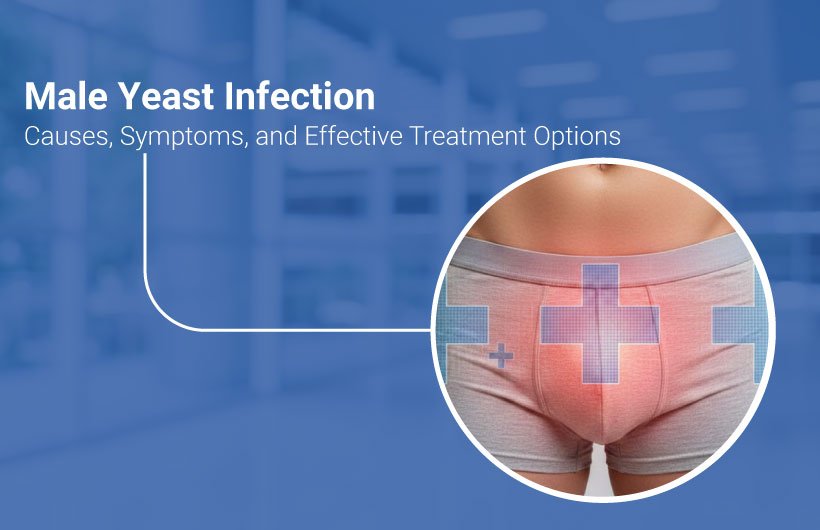
Male yeast infection is a common yet often misunderstood health issue. Many men feel uncomfortable talking about genital infections, which leads to delayed diagnosis and treatment. A yeast infection in men, also known as a Candida infection in men, can affect the penis, groin, and surrounding skin. The good news is that with proper care and timely medical advice, it is completely treatable.
In this blog, Urologist in Dhanbad Dr. Saket Narnoli explains everything you need to know about male yeast infection symptoms and causes, along with effective treatment options, in simple and easy-to-understand language.
What Is a Male Yeast Infection?
A male yeast infection is caused by an overgrowth of a fungus called Candida. This fungus normally lives on the skin and inside the body without causing problems. However, when the balance of healthy bacteria is disturbed, Candida can multiply and lead to infection.
The most common form is a penile yeast infection, which affects the head of the penis and the foreskin, especially in uncircumcised men. Candida infection in men is not usually serious, but it can be uncomfortable and may recur if not treated properly.
What Causes Male Yeast Infection?
Understanding male yeast infection symptoms and causes is important for both prevention and treatment. Some common causes include:
- Poor genital hygiene, which allows moisture and fungus to grow
- Uncontrolled diabetes, as high blood sugar promotes fungal growth
- Weak immune system, due to illness or medications
- Use of antibiotics, which kill good bacteria that control yeast
- Excessive sweating and wearing tight or non-breathable underwear
- Sexual contact with a partner who has a vaginal yeast infection
Dr. Saket Narnoli often highlights that lifestyle habits and underlying health conditions play a major role in recurring male yeast infections.
What Are the Common Symptoms of Male Yeast Infection?
Many men mistake a yeast infection for an allergy or skin irritation. Recognising the signs early can help start male yeast infection treatment on time.
Common symptoms include:
- Redness or swelling on the penis
- Itching or burning sensation, especially after urination or sex
- White, thick discharge under the foreskin
- Dry, cracked, or shiny skin on the penis
- Pain during urination or intercourse
- Unpleasant odour in the genital area
Penile yeast infection symptoms can vary from mild to severe. If symptoms persist for more than a few days, it is important to consult a specialist.
Is Male Yeast Infection Sexually Transmitted?
This is a common question many patients ask. While a male yeast infection is not classified as a sexually transmitted infection, it can spread through sexual contact. If one partner has a yeast infection, the other partner may also develop symptoms.
To avoid repeated infections, both partners may need treatment. According to Dr. Saket Narnoli, treating only one partner often leads to recurrence, especially in sexually active couples.
How Is Male Yeast Infection Diagnosed?
Diagnosis is usually simple. A doctor examines the affected area and may take a small sample of skin or discharge if needed. In most cases, the symptoms are enough to confirm Candida infection in men.
If yeast infections occur frequently, additional tests may be advised to check for diabetes or immune-related conditions.
What Are the Best Male Yeast Infection Treatment Options?
Male yeast infection treatment depends on the severity of symptoms. Most cases respond well to medications and lifestyle changes.
1) Antifungal Medications
Topical antifungal creams or ointments are commonly prescribed. These help reduce fungal growth and relieve itching and redness. In severe cases, oral antifungal tablets may be recommended.
2) Proper Hygiene
Keeping the genital area clean and dry is crucial. Gently washing with mild soap and drying thoroughly can prevent fungal growth.
3) Managing Underlying Conditions
If diabetes or immune issues are present, controlling blood sugar levels and overall health is essential for long-term relief.
4) Avoiding Irritants
Scented soaps, harsh chemicals, and tight clothing should be avoided during treatment.
Dr. Saket Narnoli advises completing the full course of treatment even if symptoms improve early, to prevent recurrence.
How Can You Prevent Male Yeast Infections?
Prevention is always better than a cure. Simple daily habits can significantly reduce the risk of penile yeast infection:
- Maintain good personal hygiene
- Wear loose, cotton underwear
- Change out of sweaty clothes quickly
- Control blood sugar if diabetic
- Avoid unnecessary use of antibiotics
- Practice safe sexual habits
Men who follow these steps are less likely to experience repeated Candida infection in men.
When Should You See a Urologist?
You should consult a specialist if:
- Symptoms do not improve within a week
- The infection keeps coming back
- There is severe pain, swelling, or discharge
- You have diabetes or a weakened immune system
Early consultation helps avoid complications and ensures proper diagnosis.
Final Thoughts
Male yeast infection is common, treatable, and nothing to be embarrassed about. Understanding male yeast infection symptoms and causes allows men to take timely action and avoid discomfort. With the right male yeast infection treatment and preventive care, most men recover quickly and fully.
If you are experiencing symptoms of a penile yeast infection or recurring Candida infection in men, expert guidance is essential. Dr. Saket Narnoli provides patient-focused care and clear treatment plans to help men regain comfort and confidence.
Taking care of your urological health is an important part of overall well-being. Never ignore the signs your body gives you.