Testicular cancer is among the most treatable cancers in men, especially when identified early. However, many men avoid discussing testicular health due to fear, hesitation, or lack of awareness. Understanding the facts can make a big difference in early detection and long-term outcomes. In this blog, we simplify the essential signs, symptoms, myths, and prevention tips to help you stay informed. With insights from an experienced Urologist in Dhanbad like Dr. Saket Narnoli, you’ll gain a clearer understanding of this condition and learn how to take proactive steps to protect your health.
What Is Testicular Cancer?
Understanding testicular cancer becomes easier when you know how it affects overall male health, including Testosterone in Men. Although the condition may seem frightening, it is one of the most treatable cancers when detected early. By recognizing symptoms on time, clearing common myths, and staying aware, men can protect both their reproductive health and hormonal balance.
If you notice any unusual changes or feel doubtful about your symptoms, consulting a qualified urologist is essential. Early diagnosis, routine checkups, and proper medical guidance play a key role in maintaining confidence, wellbeing, and healthy testosterone levels.
Who is at risk?
- Men between 15 and 45 years.
- Those with a family history.
- People who had an undescended testicle at birth.
- Men with previous testicular cancer in one testicle.
Even with these risk factors, anyone with tests can develop it. That is why self-awareness and regular monitoring are important.
What Are the Symptoms and Early Warning Signs?
Testicular cancer often starts small and painless, which makes early detection tricky. But your body gives signals. Notice these early signs:
- A painless lump or swelling in either testicle.
- A feeling of heaviness in the scrotum.
- A dull ache in the lower abdomen or groin.
- Sudden fluid buildup in the scrotum.
- Pain or discomfort in the testicle (not always present).
- Breast tenderness or enlargement due to hormonal changes.
Most lumps are not cancer, but you should never ignore them. Early diagnosis leads to a higher success rate in treatment.
What Are the Common Myths About Testicular Cancer?
Many myths stop men from seeking help. Let’s clear the confusion with facts:
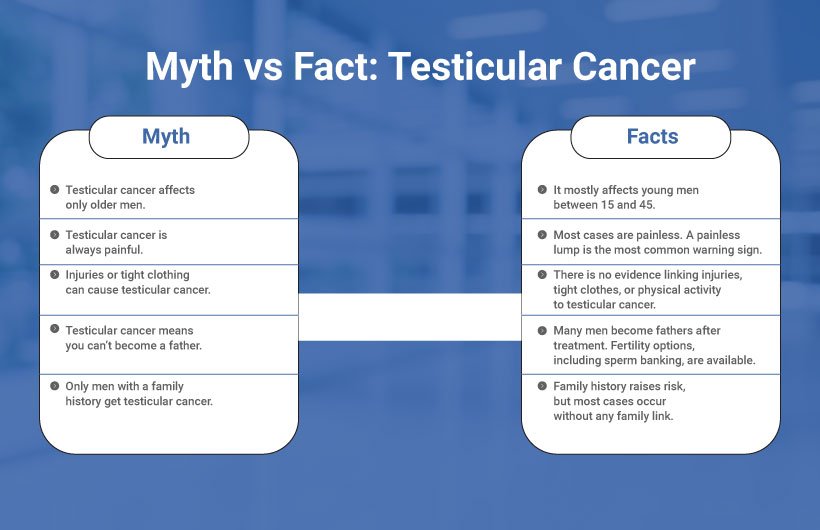
Myth 1: Only older men get testicular cancer.
Fact: Young men are more likely to get it. It is most common between the ages of 15 and 45.
Myth 2: Testicular cancer is always painful.
Fact: Most men feel no pain at all. A painless lump is the most common sign.
Myth 3: Injuries or wearing tight clothes cause testicular cancer.
Fact: There is no proven link between injuries, clothing, or physical activity and cancer.
Myth 4: If you have testicular cancer, you cannot become a father.
Fact: Many men become fathers after treatment. Options like sperm banking are also available.
Myth 5: Only men with a family history get this cancer.
Fact: Family history increases the risk, but most cases occur without any family connection.
Understanding the difference between testicular cancer myths vs facts helps men take the right steps at the right time.
What Important Facts Should Men Know About Testicular Cancer?
Here are some essential points every man should know:
- It is highly curable. Testicular cancer responds very well to treatment, especially when found early.
- It grows fast. That’s why early detection is crucial.
- Self-examination helps. Monthly self-checks can catch lumps early.
- It can spread. If ignored, it may spread to the abdomen, lungs, or lymph nodes.
- Modern treatments are effective. Surgery, chemotherapy, and radiation offer excellent outcomes.
- Survival rates are high. Even advanced stages have good recovery rates with proper treatment.
Doctors like Dr. Saket Narnoli often stress that awareness and timely treatment save lives.
How Can Men Prevent or Reduce the Risk of Testicular Cancer?
There is no guaranteed way to prevent testicular cancer, but you can reduce risks and detect it early by following these tips:
1) Perform Monthly Self-Exams
Check your testicles once a month after a warm bath. Roll each testicle gently between your fingers. Look for:
- Hard lumps
- Swelling
- Changes in size or shape
2) Maintain a Healthy Lifestyle
A strong immune system always helps:
- Eat nutritious foods.
- Stay physically active.
- Avoid smoking and excess alcohol.
3) Know Your Personal Risk
If you have an undescended testicle or have a family history, stay extra alert.
4) Do Not Ignore Symptoms
Any unusual change should be discussed immediately with a urologist.
Awareness is the first step in protecting men’s health, especially regarding testicular pain.
When Should You Seek Medical Help?
Contact a urologist like Dr. Saket Narnoli if you notice:
- Any lump, even if it doesn’t hurt.
- Swelling or heaviness in the scrotum.
- Pain in the groin or testicles.
- Sudden changes in testicle size.
- Breast tenderness or unexpected hormonal changes.
Even if symptoms seem minor, a quick check can prevent complications.
Doctors may perform:
- Physical examination
- Ultrasound
- Blood tests
- Imaging scans (if needed)
Early testing ensures early treatment, which improves recovery chances significantly.
Conclusion
Testicular cancer may sound overwhelming, but the truth is clear early detection makes it one of the most treatable cancers in men. By understanding the symptoms, debunking common myths, and staying aware of small changes in your body, you can take charge of your health. Never ignore unusual signs; if something feels off, consult a Urologist Doctor in Dhanbad without delay.
Regular urological check-ups, timely guidance, and expert care play a crucial role in staying healthy and confident. And if you’re looking for trusted medical support, reaching out to a specialist like Dr. Saket Narnoli ensures you receive accurate advice and dependable treatment.