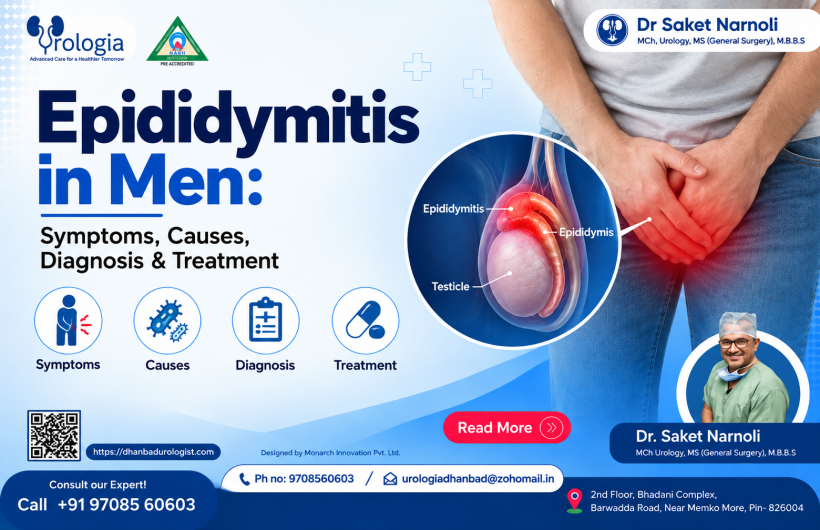
Epididymitis is inflammation of the epididymis, a small, coiled tube located behind each testicle that stores and carries sperm. It can cause pain, tenderness and swelling in the scrotum and may develop gradually or, in some cases, more suddenly.
Although epididymitis is often caused by an infection, the underlying cause can vary. Sexually transmitted infections, urinary tract infections, prostate-related problems, urinary procedures and other conditions can all be associated with epididymitis.
Because testicular torsion can produce similar symptoms and is a surgical emergency, sudden severe scrotal pain should never be assumed to be epididymitis without medical assessment.
If you are experiencing testicular or scrotal pain, understanding the symptoms, causes and treatment options can help you know when to seek urological care.
What Is Epididymitis?
The epididymis is a narrow, coiled tube positioned behind the testicle. It plays an important role in storing and transporting sperm.
When this structure becomes inflamed, the condition is called epididymitis.
Epididymitis can occur at any age, although the underlying cause can differ depending on factors such as age, sexual health, urinary conditions and previous medical procedures.
In some cases, inflammation can spread from the epididymis to the testicle. When both structures are involved, the condition is called epididymo-orchitis.
What Are the Symptoms of Epididymitis?
Symptoms can develop gradually and commonly affect one side of the scrotum.
Common symptoms include:
- Pain or tenderness in one testicle
- Swelling of the scrotum
- Warmth or redness of the scrotal skin
- Pain while urinating
- Frequent or urgent urination
- Discharge from the penis
- Pain or discomfort in the lower abdomen or pelvis
- Fever in some cases
- Blood in the semen
- Tenderness around the epididymis
Epididymitis commonly causes gradually developing, one-sided testicular or scrotal pain, although the presentation can vary.
If you are experiencing testicular pain without knowing the cause, our detailed guide on Testicular Pain in Men: Causes, Treatment & When to See a Urologist in Dhanbad provides additional information about other possible causes.
What Causes Epididymitis in Men?
Epididymitis can have infectious and non-infectious causes.
1. Sexually Transmitted Infections
In sexually active men, infections such as chlamydia and gonorrhea are important causes of acute epididymitis.
An STI-related infection may also cause urethritis, although urethral symptoms are not always obvious.
Possible associated symptoms include:
- Penile discharge
- Burning during urination
- Testicular or scrotal discomfort
- Urinary frequency
- Pelvic discomfort
Appropriate testing is important because treatment should address the specific infection and help prevent transmission.
2. Urinary Tract Infections
Bacteria associated with urinary tract infections can sometimes spread toward the epididymis.
This is one reason men with epididymitis may also experience urinary symptoms such as burning, urgency or frequent urination.
If you frequently experience urinary symptoms, you can also read about urinary tract infections and their symptoms and discuss recurrent symptoms with a urologist.
3. Prostate Problems
In some men, bacteria associated with a prostate or urinary infection can contribute to epididymitis.
Urinary obstruction can also increase the risk of urinary infections. Conditions such as benign prostatic hyperplasia (BPH) are particularly relevant in older men.
If you are experiencing urinary difficulty along with scrotal symptoms, an evaluation may need to consider both the urinary tract and reproductive system.
4. Urinary Tract Procedures
Epididymitis can sometimes occur after procedures involving the urinary tract.
Risk factors can include:
- Urinary catheterization
- Urinary tract instrumentation
- Certain urological procedures
- Prostate biopsy
The risk and likely cause depend on the individual clinical situation.
5. Trauma or Injury
An injury to the groin can cause inflammation and discomfort around the testicle and epididymis.
However, significant testicular or scrotal pain following an injury should be assessed by a medical professional because other conditions can also occur after trauma.
6. Other Less Common Causes
Less common causes can include:
- Tuberculosis
- Viral infections
- Inflammatory conditions
- Urine reflux into the epididymis
- Certain anatomical abnormalities
Chronic epididymal pain may also have causes that cannot be identified immediately.
Is Epididymitis an STI?
Not always.
Epididymitis can be caused by sexually transmitted infections, but it can also result from bacteria associated with urinary or prostate infections and other non-sexually transmitted causes.
This distinction is important because the appropriate evaluation and treatment depend on the likely cause.
If an STI is suspected, appropriate testing and treatment for the patient and, when necessary, sexual partners are important.
Epididymitis vs Testicular Torsion: Why the Difference Matters
Epididymitis and testicular torsion can both cause testicular or scrotal pain, but they are very different conditions.
Epididymitis is inflammation of the epididymis and is commonly associated with infection.
Testicular torsion occurs when the spermatic cord twists and can cut off the blood supply to the testicle.
Testicular torsion is a surgical emergency. Sudden severe unilateral testicular pain should therefore be evaluated urgently rather than assumed to be epididymitis.
Seek emergency medical attention if you develop:
- Sudden severe testicular pain
- Rapid scrotal swelling
- Severe pain with nausea or vomiting
- A testicle that appears higher than usual
- Sudden pain without clear evidence of infection
For a broader explanation of these warning signs, see Testicular Pain in Men: Causes, Treatment & When to See a Urologist in Dhanbad.
How Is Epididymitis Diagnosed?
A doctor will generally begin with a detailed medical history and physical examination.
The evaluation may consider:
- When the pain began
- Whether it developed suddenly or gradually
- Whether one or both sides are affected
- Urinary symptoms
- Penile discharge
- Fever
- Recent sexual exposure
- Previous urinary infections
- Previous urinary procedures
- History of testicular or groin injury
Additional tests may be recommended depending on the suspected cause.
Urine Testing
Urine tests can help identify evidence of inflammation or urinary infection.
Bacterial urine cultures may also be used to identify urinary pathogens and help guide treatment.
STI Testing
When sexually transmitted infection is suspected, testing for organisms such as Chlamydia trachomatis and Neisseria gonorrhoeae may be recommended.
CDC guidance recommends testing men with suspected acute epididymitis for these infections using appropriate nucleic acid amplification testing.
Blood Tests
Blood tests may be considered when there are signs of systemic infection or when additional information is needed.
Scrotal Ultrasound
A scrotal ultrasound with Doppler may be used when the diagnosis is uncertain or when testicular torsion needs to be evaluated.
Importantly, ultrasound is not simply a substitute for clinical assessment. CDC guidance notes that ultrasound is primarily useful for evaluating suspected torsion or unclear acute scrotal presentations, and a negative ultrasound does not by itself rule out epididymitis.How Is Epididymitis Treated?
Treatment depends on the underlying cause.
When bacterial infection is responsible, antibiotics are generally required. The choice of antibiotic depends on factors such as the suspected organism, STI risk, urinary bacteria, local resistance patterns and the patient’s clinical situation.
Treatment may include:
- Appropriate antibiotics
- Rest
- Scrotal support or elevation
- Pain-relieving medication when appropriate
- Cold packs for discomfort
- Treatment of an underlying urinary or prostate problem
- STI evaluation and treatment when indicated
Do not self-prescribe antibiotics. The correct medicine and duration depend on the suspected cause and individual medical circumstances.
How Long Does Epididymitis Take to Improve?
Symptoms often begin to improve within a few days after appropriate treatment, but complete resolution of pain and swelling can take longer.
Mayo Clinic notes that discomfort and swelling may take several weeks to fully resolve even after treatment begins.
CDC guidance recommends reassessment if symptoms do not improve within 72 hours after treatment. Persistent swelling or tenderness after treatment may require evaluation for another diagnosis or complication.
Therefore, don’t assume that persistent symptoms are normal simply because you have already completed medication.
What Can You Do at Home During Recovery?
Alongside the treatment recommended by your doctor, some measures may help reduce discomfort.
These can include:
- Getting adequate rest
- Supporting or elevating the scrotum
- Using cold packs as advised
- Avoiding strenuous activity
- Avoiding heavy lifting while symptoms are active
- Taking prescribed medication as directed
Mayo Clinic also recommends avoiding sexual activity until the infection has cleared when epididymitis is related to an STI.
These measures are supportive and should not replace medical treatment when an infection is suspected.
Can Epididymitis Affect Fertility?
Most men with appropriately treated epididymitis recover without major long-term problems. However, complications can occur.
Possible complications include:
- Abscess
- Hydrocele
- Epididymo-orchitis
- Chronic pain
- Rarely, reduced fertility
Repeated or severe infections may require more detailed evaluation.
If you are experiencing fertility difficulties along with testicular or epididymal symptoms, you can also explore our information about male infertility treatment in Dhanbad.
What Is Chronic Epididymitis?
Acute epididymitis generally refers to symptoms lasting less than six weeks.
When discomfort or pain continues for six weeks or longer, the condition may be considered chronic epididymitis.
Chronic epididymal or scrotal pain can have several possible causes, and an infection is not always responsible.
If symptoms keep returning or do not settle after treatment, a urologist may need to reassess the diagnosis rather than simply repeating antibiotics.
When Should You See a Urologist?
You should arrange a urological evaluation if you experience:
- Persistent testicular or scrotal pain
- Scrotal swelling
- Pain while urinating
- Penile discharge
- Recurrent urinary infections
- Repeated episodes of epididymal pain
- Blood in semen
- Fertility concerns
- Symptoms that do not improve after treatment
If pain is sudden and severe, seek emergency medical attention because testicular torsion must be ruled out.
Epididymitis Treatment in Dhanbad
If you are looking for epididymitis treatment in Dhanbad, an accurate diagnosis is the first step.
Dr. Saket Narnoli is a urologist and andrologist providing specialist care for urinary and male reproductive conditions in Dhanbad.
An evaluation may help determine whether symptoms are related to epididymitis, urinary infection, prostate disease, testicular torsion, varicocele or another cause of scrotal pain.
You can learn more about Dr. Saket Narnoli and his qualifications or explore the clinic’s urology and andrology services.
If you have persistent symptoms or need specialist assessment, you can also contact the clinic to discuss an appointment.
How Can Epididymitis Be Prevented?
Not every case of epididymitis can be prevented, but some measures can reduce certain risks.
Practice safer sex
Using condoms and maintaining appropriate sexual health practices can reduce the risk of STIs that may cause epididymitis.
Treat urinary infections appropriately
Recurrent urinary symptoms should not be ignored. Proper diagnosis and treatment may help address underlying urinary problems.
Follow medical advice after urinary procedures
If you have undergone catheterization, prostate biopsy or another urinary procedure, follow the post-procedure instructions provided by your healthcare team.
Seek care for persistent symptoms
Don’t repeatedly self-treat testicular pain without identifying the cause.
Final Takeaway
Epididymitis is a treatable cause of testicular and scrotal pain, but the symptoms should not be self-diagnosed.
The condition can result from sexually transmitted infections, urinary or prostate infections, urinary procedures, trauma and other causes. Diagnosis may involve a physical examination, urine testing, STI testing and, when necessary, scrotal ultrasound.
Most importantly, sudden severe testicular pain requires urgent medical assessment because testicular torsion can present with similar symptoms and needs emergency treatment.
If you are experiencing persistent testicular pain, swelling, urinary symptoms or recurrent episodes, consult a qualified urologist to identify the underlying cause and determine the appropriate treatment.
For more information about possible causes of scrotal pain, read Testicular Pain in Men: Causes, Treatment & When to See a Urologist in Dhanbad.
Book Your Appointment with Dr. Saket Narnoli Today!
Consult Dr. Saket Narnoli, leading Uro-Oncologist and Laparoscopic Urologist in Dhanbad, for kidney, bladder, prostate, and urinary tract conditions. Call today to schedule your visit.
Frequently Asked Questions About Epididymitis
Is epididymitis painful?
Yes. Epididymitis commonly causes pain and tenderness, often affecting one side of the scrotum. Swelling and warmth may also occur.
Can epididymitis go away on its own?
Some symptoms may fluctuate, but suspected bacterial epididymitis generally requires medical assessment and appropriate treatment. Antibiotics are commonly used when a bacterial infection is identified or suspected.
Is epididymitis caused only by an STI?
No. STIs are important causes, particularly in sexually active men, but urinary and prostate infections and other non-sexually transmitted causes can also lead to epididymitis.
Can epididymitis cause testicular swelling?
Yes. Inflammation can cause swelling and tenderness around the epididymis and may extend to the testicle.
Can epididymitis affect fertility?
In some cases, complications of epididymitis can affect fertility, although reduced fertility is considered an uncommon complication.
How quickly should epididymitis be treated?
You should seek medical evaluation rather than waiting for symptoms to worsen. If treatment has already started and symptoms are not improving within about 72 hours, CDC guidance recommends reassessment.
Is epididymitis the same as testicular torsion?
No. Epididymitis is inflammation of the epididymis, while testicular torsion involves twisting of the spermatic cord and can cut off blood supply to the testicle. Torsion is a surgical emergency.
Medical Disclaimer: This article is intended for general educational purposes and does not replace an in-person medical consultation. Epididymitis can have different causes, and diagnosis and treatment should be determined by a qualified healthcare professional based on the patient’s symptoms, examination and appropriate investigations.