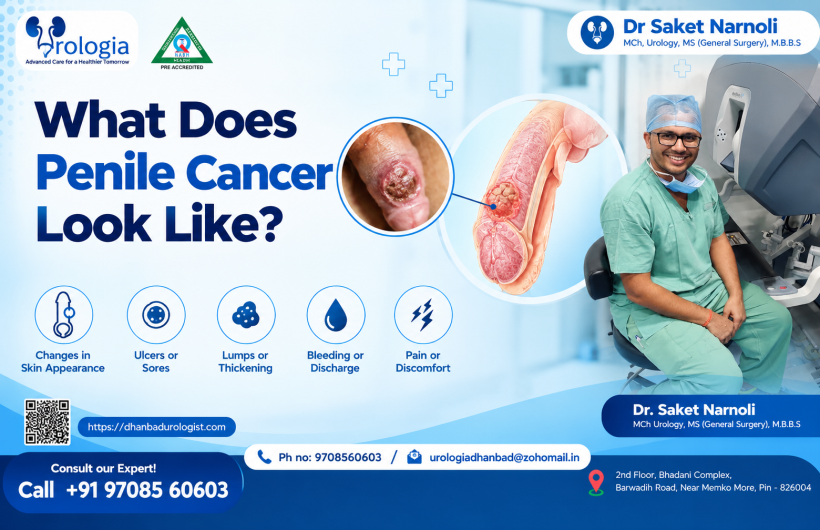
Penile cancer can look like a sore that does not heal, a lump, a skin growth, or a change in the colour or thickness of the skin on the penis. It may appear on the head of the penis, under the foreskin, or on the shaft. Some changes may be painless in the beginning, so they are easy to ignore.
However, not every lump, rash, or sore is cancer. Infections and other skin conditions can cause similar symptoms. Knowing what to look for and getting unusual changes checked by a doctor can help with early diagnosis.
If you notice a persistent change, consulting a qualified urologist, such as a urologist in Dhanbad, can help you understand the possible cause and the next steps.
What Does Penile Cancer Look Like in the Early Stages?
In the early stages, penile cancer may appear as a small area of abnormal skin. It can look different from one person to another, depending on where it develops and the type of cancer.
Common early changes include:
- A small lump or growth on the penis
- A sore or ulcer that does not heal
- A red or velvety patch on the skin
- A white, thickened, or unusual area of skin
- A change in the colour or texture of the foreskin
- A small crusty or raised skin growth
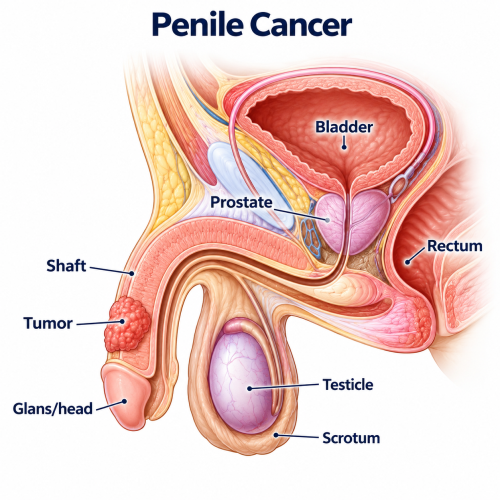
These changes may occur on the head of the penis, called the glans, or under the foreskin. They can also appear on the shaft.
One important point is that penile cancer may not cause pain in its early stages. A painless sore or lump should not be ignored simply because it does not hurt.
For information about specialist care, the Andrologist service for penile cancer provides a relevant starting point for discussing male reproductive health and urological concerns.
The doctor may also discuss the possible effects of treatment on intimacy and sexual wellbeing. For men concerned about these changes, sexual health after penile cancer is an important part of recovery and follow-up care.
6 Common Signs and Symptoms of Penile Cancer
The appearance of penile cancer is not always the same. The following signs can help you recognise changes that need medical attention.
1. A Sore That Does Not Heal
A persistent sore is one possible sign of penile cancer. It may look like a small wound, an open ulcer, or an area where the skin has broken.
The sore may bleed, develop a crust, or remain present for several weeks without healing. Some sores are painless, while others may cause discomfort.
A sore that does not heal, keeps returning, or gradually becomes larger needs medical evaluation.
2. A Lump or Growth on the Penis
Penile cancer may appear as a small lump, a raised area, or an unusual growth on the skin. The surface may be smooth, rough, crusty, or ulcerated.
Some growths may become larger over time or begin to bleed. Others may look like a small bump that does not seem serious at first.
Do not try to identify the cause by appearance alone. A doctor needs to examine any new or persistent growth to determine whether it is due to an infection, a skin condition, or something more serious.
3. Red, White, or Dark Patches on the Skin
Changes in skin colour can also be a warning sign.
The affected area may appear:
- Red or pink
- White or lighter than the surrounding skin
- Brownish or bluish
- Thicker or different in texture from nearby skin
Some lesions may look like a red, velvety patch, while others may appear flat or slightly raised.
These colour changes do not automatically mean cancer. Inflammation, irritation, and other skin conditions can cause similar changes. Persistent or unusual patches should still be checked by a urologist.
4. Thickening of the Skin or Changes in the Foreskin
The skin of the penis or foreskin may become thicker, tighter, or less flexible than usual.
You may notice that pulling back the foreskin becomes difficult, even if you could do so comfortably before. This can happen when a condition affects the skin around the head of the penis.
Difficulty retracting the foreskin can have several causes, including inflammation and infection. However, if it develops along with a sore, lump, bleeding, or a persistent skin change, it needs medical assessment.
5. Bleeding or Unusual Discharge
Bleeding from the penis or under the foreskin can sometimes occur with penile cancer. You may notice blood from a sore or growth, or discharge that was not present before.
A foul-smelling discharge may also occur, particularly when there is an underlying infection or an affected area under the foreskin.
Bleeding and discharge are not specific to cancer, but they should not be ignored when they persist or occur with other unusual changes.
6. Swelling or a Lump in the Groin
In some cases, penile cancer may spread to nearby lymph nodes. These are small structures that help the body fight infections.
If the lymph nodes become enlarged, you may notice a lump or swelling in the groin.
However, swollen groin lymph nodes are more commonly linked to infections and other conditions. A doctor needs to assess the swelling and determine its cause.
How Does Penile Cancer Look as It Progresses?
The appearance of penile cancer can change as it grows. An early lesion may be a small patch or sore, while a more advanced lesion may become larger, ulcerated, or prone to bleeding.
Possible changes include:
- A sore that becomes larger or deeper
- A growth that bleeds repeatedly
- Increasing swelling around the affected area
- More difficulty pulling back the foreskin
- A persistent discharge or unpleasant smell
- New lumps in the groin
These changes do not confirm that cancer has spread. However, they are reasons to seek prompt medical assessment.
The stage of penile cancer cannot be determined by looking at the skin alone. A doctor may need a biopsy and other tests to understand the extent of the disease.
Is Every Lump or Sore on the Penis Cancer?
No. Many conditions can cause a lump, rash, sore, or change in the skin of the penis.
Possible causes include:
- Fungal or bacterial infections
- Inflammation of the glans or foreskin
- Sexually transmitted infections
- Skin conditions such as eczema or psoriasis
- Irritation caused by soaps, creams, or other products
- Benign skin growths
Some of these conditions may improve with the right treatment. Others may need further investigation.
The important difference is that you cannot reliably distinguish penile cancer from other conditions by appearance alone. A persistent or unusual change needs a proper examination, especially if it does not improve or keeps returning.
Avoid applying unprescribed creams or home remedies to a suspicious sore. These may irritate the skin or delay the correct diagnosis.
When Should You See a doctor?
Arrange a medical consultation if you notice a new or persistent change in the appearance of your penis.
You should seek medical advice if you have:
- A sore that does not heal within a few weeks
- A new lump or growth
- A persistent red, white, or dark patch
- Bleeding from the penis or under the foreskin
- Unusual or foul-smelling discharge
- Difficulty pulling back the foreskin that is new or worsening
- A lump or swelling in the groin
- A skin change that becomes larger or keeps returning
Do not wait for pain to develop before seeking help. Penile cancer can be painless in its early stages.
If you feel uncomfortable discussing these symptoms, remember that doctors are trained to examine sensitive areas and discuss private health concerns professionally. Early evaluation can help identify the cause and allow appropriate treatment.
How Is Penile Cancer Diagnosed?
A doctor will ask about your symptoms, when they started, and whether the affected area has changed over time. They will also examine the penis and may check the groin for enlarged lymph nodes.
Physical Examination
The doctor examines the affected skin, looking at the size, location, colour, and appearance of the sore or growth.
They may also ask about pain, bleeding, discharge, difficulty retracting the foreskin, and any previous treatment.
Biopsy
A biopsy is the main test used to confirm penile cancer. During this procedure, the doctor takes a small tissue sample from the suspicious area.
The sample is examined under a microscope to check for cancer cells. A biopsy helps distinguish cancer from other skin conditions and guides the next steps.
Scans and Other Tests
If cancer is confirmed, additional tests may be needed to understand its size and whether it has spread to nearby lymph nodes or other parts of the body.
These tests may include ultrasound, magnetic resonance imaging (MRI), computed tomography (CT), or other investigations, depending on the clinical findings.
Not every patient needs every test. The doctor chooses investigations based on the suspected condition and examination results.
What Are the Treatment Options for Penile Cancer?
Treatment depends on the size and location of the cancer, its stage, and the patient’s overall health.
When penile cancer is found early, treatment may be possible while preserving as much healthy tissue and function as possible.
Treatment options may include:
- Creams or local treatments: Used for selected early, superficial lesions.
- Laser treatment: May be suitable for certain small, early lesions.
- Surgery: Removes the cancerous tissue. The amount of tissue removed depends on the tumour.
- Radiotherapy: May be considered for selected patients.
- Chemotherapy or other cancer treatments: May be recommended in certain cases, depending on the stage and treatment plan.
Not every patient needs major surgery. The specialist will explain which options are suitable and discuss their possible effects on appearance, urination, sexual function, and recovery.
Can Penile Cancer Affect Sexual Function and Fertility?
Penile cancer and its treatment can affect sexual wellbeing in different ways. The impact depends on the size and location of the tumour and the type of treatment required.
Some men may have concerns about erections, sensitivity, body image, intimacy, or confidence after treatment. These concerns are valid and can be discussed with the treating specialist.
Fertility is a separate issue. Penile cancer does not automatically mean that a man is infertile, but individual circumstances and treatment plans may affect reproductive health.
If you have concerns about having children, discuss them with your doctor before treatment whenever possible. A separate assessment for Male Infertility Treatment may help address fertility concerns when appropriate.
Some urinary and reproductive conditions require different surgical approaches. Laparoscopic Urology Treatment is used for selected urological conditions; however, penile cancer treatment is planned according to the location and stage of the tumour, and not every procedure is performed laparoscopically.
How Can You Reduce the Risk of Penile Cancer?
Not all cases can be prevented, but some steps may help reduce certain risk factors and support genital health.
- Maintain gentle daily hygiene, including cleaning under the foreskin if it retracts comfortably.
- Avoid smoking.
- Seek medical advice for persistent inflammation, sores, or unusual skin changes.
- Discuss human papillomavirus (HPV) vaccination with a qualified healthcare professional, according to your age and eligibility.
- Practise safer sex to reduce the risk of sexually transmitted infections.
- Do not ignore changes that persist or become worse.
Good hygiene does not guarantee that cancer will be prevented. The goal is to maintain skin health and identify unusual changes early.
For information about Dr. Saket Narnoli’s urological practice, visit his profile as a famous urologist in Dhanbad.
Final Takeaway
Penile cancer may look like a persistent sore, lump, skin growth, unusual patch, or thickened area on the penis. It may also cause bleeding, discharge, or changes in the foreskin. These symptoms can have other causes, so appearance alone is not enough to make a diagnosis.
You can also review the existing guide on penile cancer awareness, signs and symptoms for related information.
Book Your Appointment with Dr. Saket Narnoli Today!
Consult Dr. Saket Narnoli, leading Uro-Oncologist and Laparoscopic Urologist in Dhanbad, for kidney, bladder, prostate, and urinary tract conditions. Call today to schedule your visit.
References:
- NHS – Symptoms of Penile Cancer
- 3National Cancer Institute – What Is Penile Cancer?
- National Cancer Institute – Penile Cancer Diagnosis and Prognosis
Medical disclaimer: This article is for general information only and does not replace professional medical advice, diagnosis, or treatment. Please consult a qualified healthcare professional about any unusual or persistent changes.