Dr. Saket Narnoli, Consultant Urologist, Andrologist and Uro-Oncologist, M.Ch (Urology), BJ Medical College, Ahmedabad
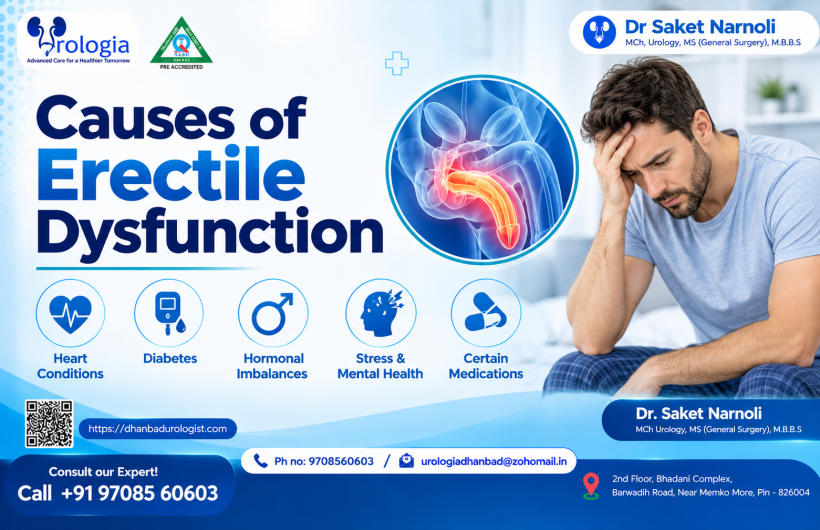
The common causes of erectile dysfunction (ED) fall into four groups: reduced blood flow, nerve damage, hormone problems, and stress or anxiety. Many men have more than one cause at the same time.
Understanding the causes of erectile dysfunction matters because ED is often the first visible sign of a health problem elsewhere in the body, such as diabetes or heart disease. It is a medical condition, not a personal failing. As a urologist in Dhanbad, we meet many men who have quietly worried about this for months or even years before asking anyone.
What Is Erectile Dysfunction, and When Is It a Real Problem?
Erectile dysfunction means regularly being unable to get or keep an erection firm enough for sex. An occasional bad night, especially during stress, illness or after alcohol, is normal and does not count as ED.
Doctors usually consider it ED when the difficulty happens more often than not over a few months. At that point, it is worth looking for a cause rather than waiting for it to pass.
Why Can So Many Different Things Cause ED?
An erection needs four systems to work together. Think of it like a water supply: blood vessels are the pipes, nerves are the wiring, hormones are the power supply, and the brain is the control room.
If any one of these fails, the result looks the same to the patient. That is why two men with ED can have completely different causes, and why the same treatment does not work for everyone.
Which Health Conditions Cause Erectile Dysfunction?
Physical causes are common, especially after the age of 40. These are the ones we check for first:
- Diabetes: High blood sugar slowly damages both the small blood vessels and the nerves of the penis. This is one of the most frequent physical causes we see in clinic.
- High blood pressure, high cholesterol and blocked arteries: The arteries supplying the penis are much smaller than those supplying the heart. For this reason, ED can appear before any heart symptoms do, and many men are surprised to hear that.
- Obesity and metabolic syndrome: Extra weight around the belly affects blood vessel health and hormone levels.
- Nerve conditions and injuries: Spinal cord injury, stroke, multiple sclerosis and pelvic fractures can interrupt the signals needed for an erection.
- Pelvic surgery or radiation: Treatment for prostate, bladder or rectal problems can affect nerves and blood supply.
- Other conditions: Peyronie’s disease (a curved, scarred penis), chronic kidney disease and sleep apnea can also play a role.
Can Low Testosterone Cause Erectile Dysfunction?
It can contribute, but it is not the cause in every man. Testosterone mainly drives sexual desire, and a low level may also weaken erections.
If you have low desire, constant tiredness and ED together, a blood test is worth doing. You can read more about the low testosterone symptoms we look for in clinic.
Can Your Medicines Cause Erectile Dysfunction?
Yes. This is one of the most overlooked causes, and patients often tell us the problem started a few weeks after a new tablet.
Medicines that can contribute include some blood pressure tablets (such as beta-blockers and water pills), certain antidepressants, some prostate medicines, and opioid painkillers. Please do not stop any medicine on your own. Your doctor can often adjust the dose or switch you to an alternative.
How Do Smoking, Alcohol and Tobacco Affect Erections?
Smoking narrows blood vessels, which directly reduces blood flow to the penis. In Jharkhand, we also see many men who chew tobacco in the form of gutkha or khaini. These affect blood vessels in the same harmful way.
Alcohol is a different story. A drink or two may lower inhibition, but regular heavy drinking damages nerves and can lower testosterone over time.
Long, irregular or night shifts, which are common in Dhanbad’s coal and industrial belt, add to the problem by disrupting sleep and hormones.
Can Stress and Anxiety Cause Erectile Dysfunction?
Yes, and this is the most common cause in younger men. Performance anxiety, depression, work pressure, money worries and relationship tension can all interfere with the brain’s signal for an erection.
This is where patients often get stuck in a loop. One difficult night creates fear of the next, and the fear itself makes it more likely to happen again.
One clue we use: if you still have normal morning erections, or the problem happens only in certain situations, a psychological cause becomes more likely. Even so, we never assume this without checking the physical causes first.
When Should You See a Doctor About ED?
Book an appointment if any of the following applies to you:
- The problem has lasted more than a few weeks and keeps happening.
- It started suddenly after an injury, surgery or a new medicine.
- You have diabetes, high blood pressure or high cholesterol.
- You also have chest discomfort, breathlessness on exertion, or numbness in the legs or groin.
- You notice pain, a lump or a bend in the penis.
- You also have urinary problems such as a weak stream or getting up at night to pass urine.
How Does a Urologist Find the Cause?
The visit usually starts with a private conversation about your symptoms, medicines, habits and medical history. Dr. Saket Narnoli then does a physical examination and checks blood pressure.
Blood tests commonly include blood sugar, cholesterol and testosterone. In some cases, a Doppler ultrasound of the penis is used to check blood flow.
The cause decides the treatment. It may mean controlling diabetes, changing a medicine, counselling, tablets, or other options, and our guide on erectile dysfunction symptoms, diagnosis and treatment explains what each involves.
Not every cause can be reversed, but a large number of men improve once the underlying problem is found and treated.
Don’t Wait Another Year to Find Out What Is Causing It
Most men who come to us say the hardest step was the first one. Once the cause is clear, whether it is blood sugar, a medicine, hormones or stress, there is usually a practical way forward.
If you recognise yourself in this guide, you can contact us to book a private consultation at our clinic in Bhadani Complex, Barwadda Road, Dhanbad. If you prefer to ask a question first, you can also chat with us on WhatsApp.
Book Your Appointment with Dr. Saket Narnoli Today!
Consult Dr. Saket Narnoli, leading Uro-Oncologist and Laparoscopic Urologist in Dhanbad, for kidney, bladder, prostate, and urinary tract conditions. Call today to schedule your visit.
Frequently Asked Questions
Can erectile dysfunction be cured?
It depends on the cause. When it comes from a treatable problem such as a medicine, stress, or poorly controlled diabetes, it often improves a great deal. When the cause is permanent nerve or blood vessel damage, treatment can still help you have satisfactory erections.
Does masturbation cause erectile dysfunction?
There is no good evidence that normal masturbation causes ED. Guilt, anxiety or compulsive habits can sometimes affect sexual confidence, and that is worth discussing with a doctor.
Is erectile dysfunction a warning sign of heart disease?
It can be. Because the penile arteries are small, ED may show up before other heart symptoms. This is why a man with ED, especially one with diabetes or high blood pressure, should also have his heart risk checked.
Can young men get erectile dysfunction?
Yes. In men under 40, stress, anxiety, smoking, alcohol and drug use are the more common causes, though diabetes and low testosterone are possible too.
Should I see a urologist or an andrologist for ED?
Either can help. An andrologist focuses on male sexual and reproductive health, while a urologist also treats related urinary and prostate conditions. Dr. Narnoli is trained in both areas.
This article is for general information only and is not a substitute for medical advice. Please consult a qualified doctor about your own symptoms.